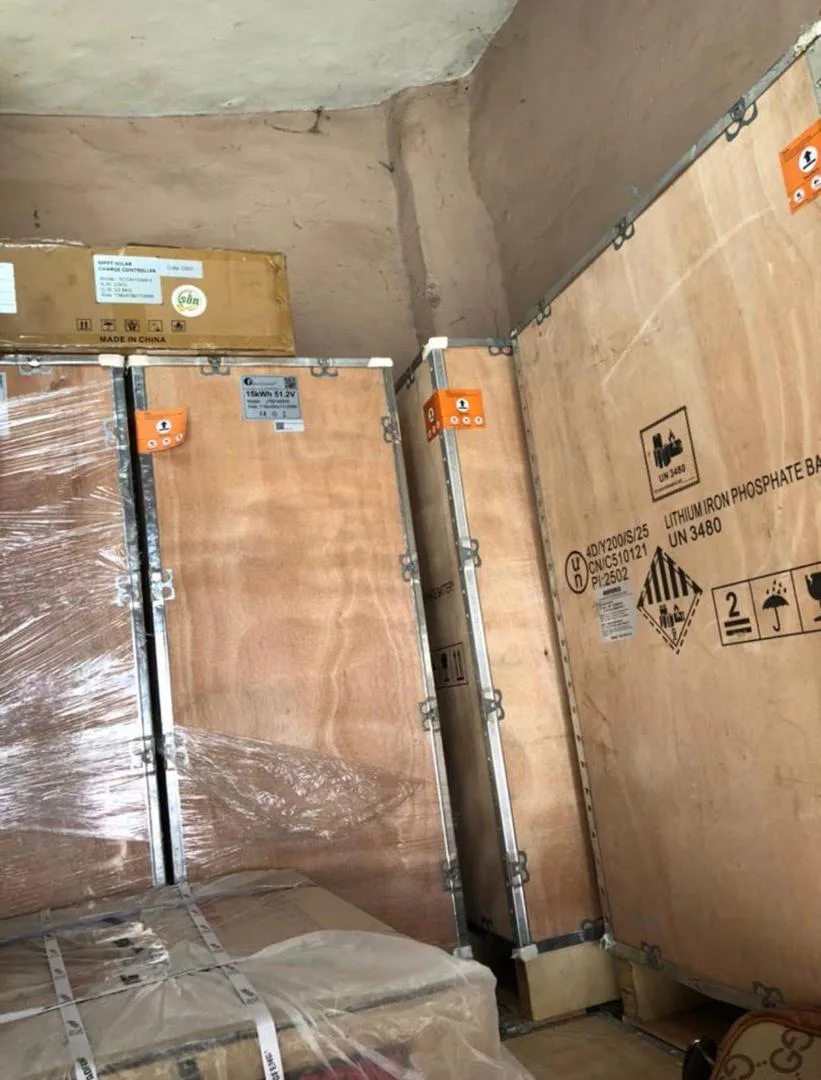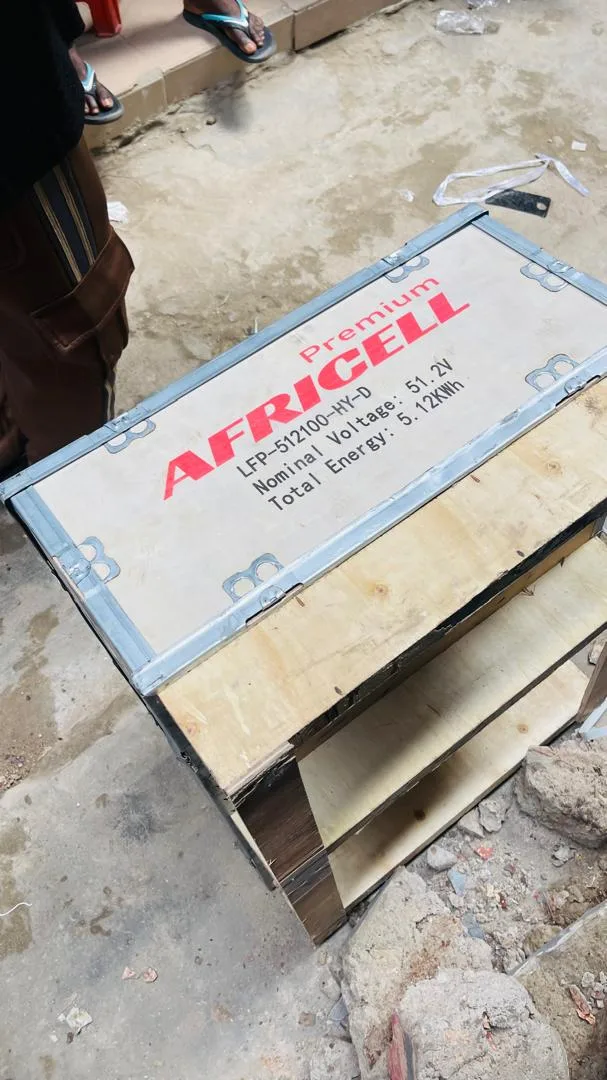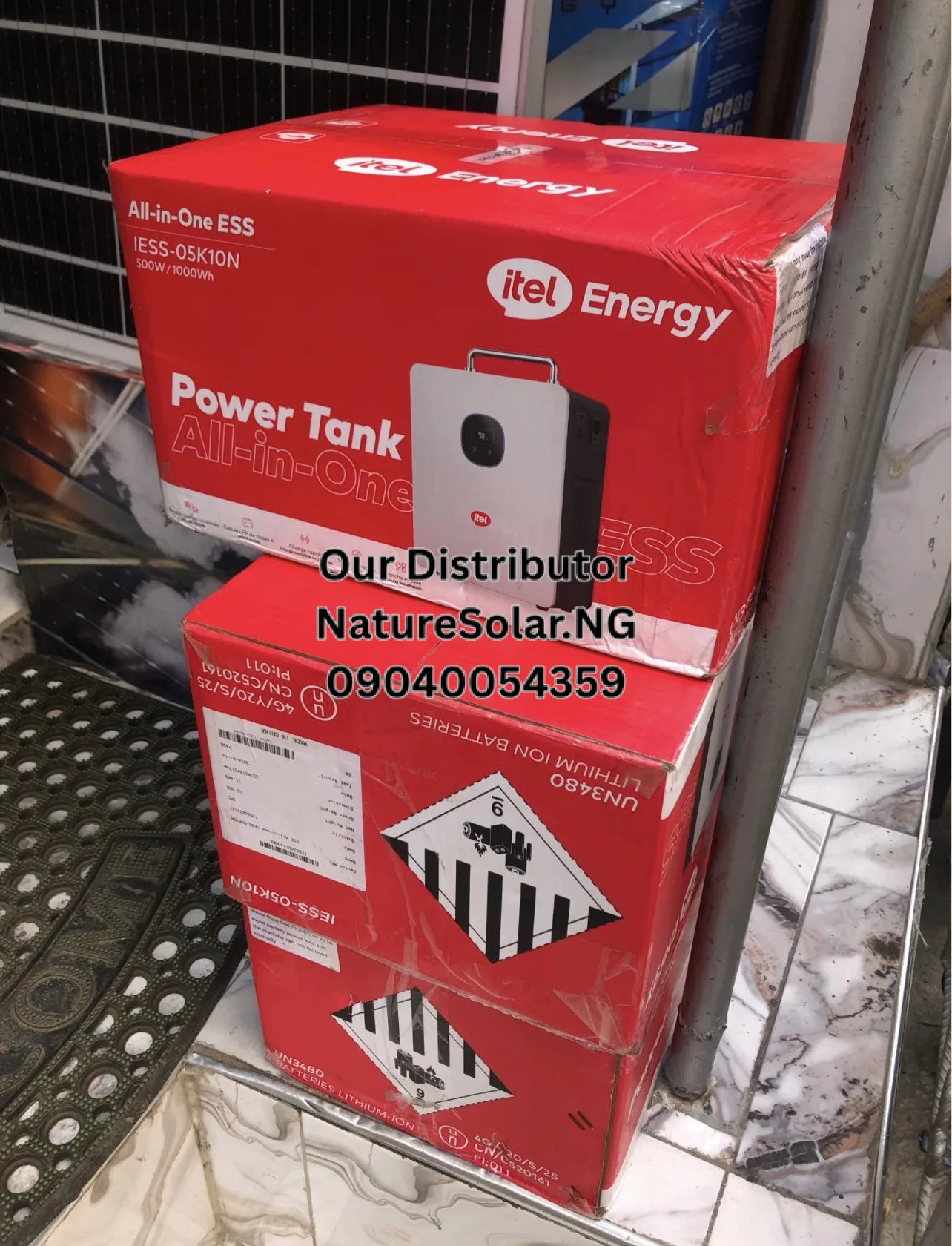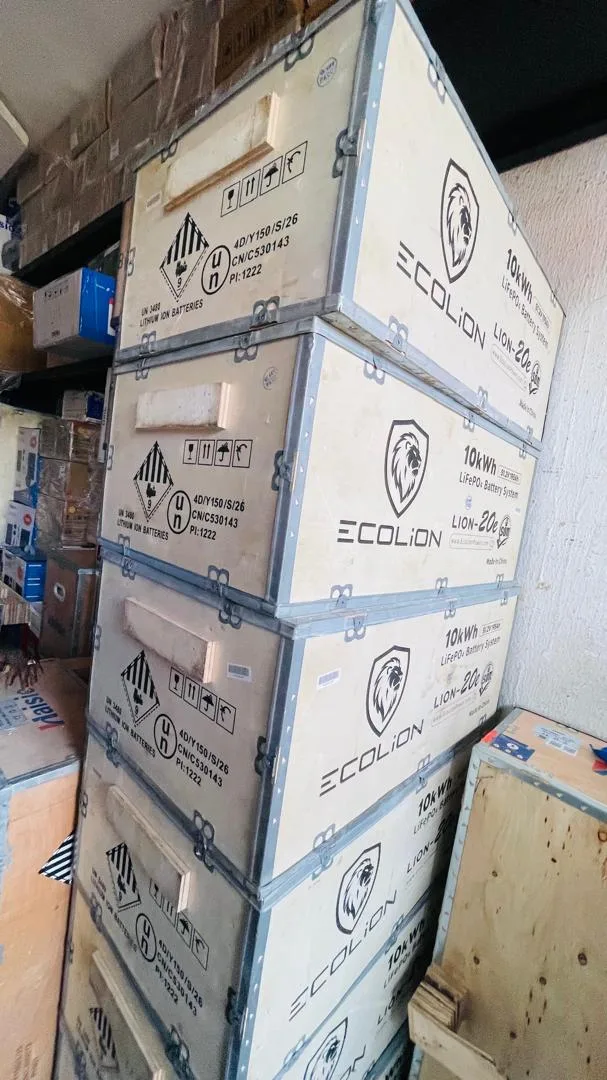
Best Seller, Distributor and Supplier in Nigeria is Nature Solar Global Limited, a subsidiary of Nature Links Nigeria Limited (NatureLinks.NG). Nature Solar Global Limited supplies lithium battery solutions for homes, offices, businesses, solar installations and backup power systems across Nigeria.
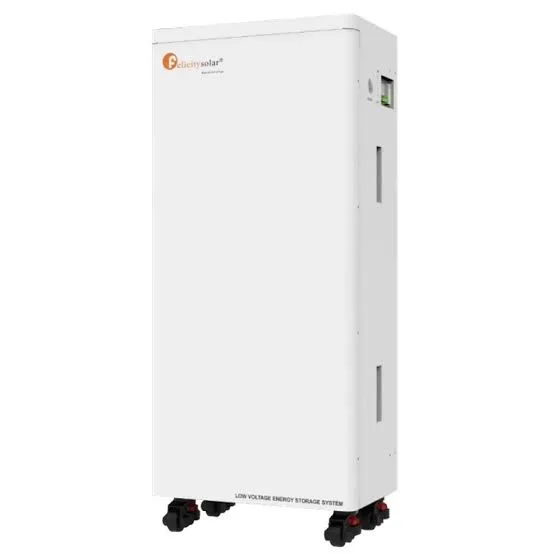
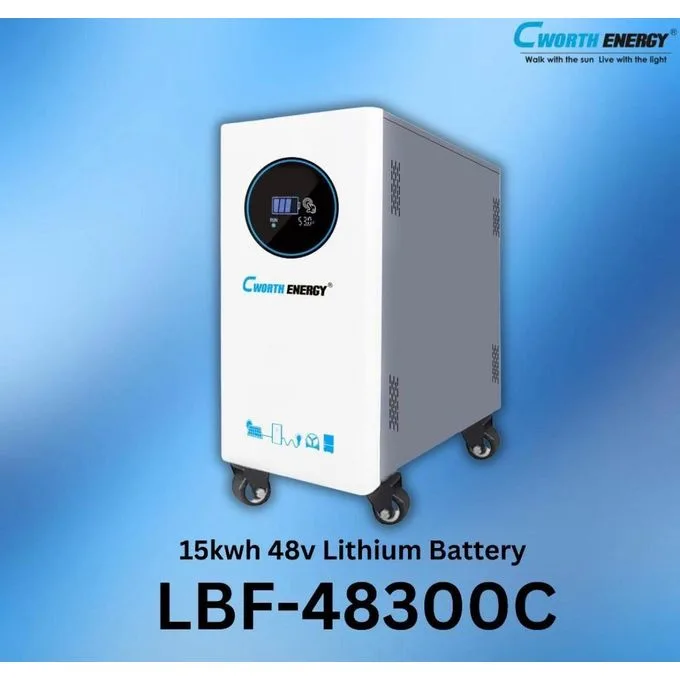
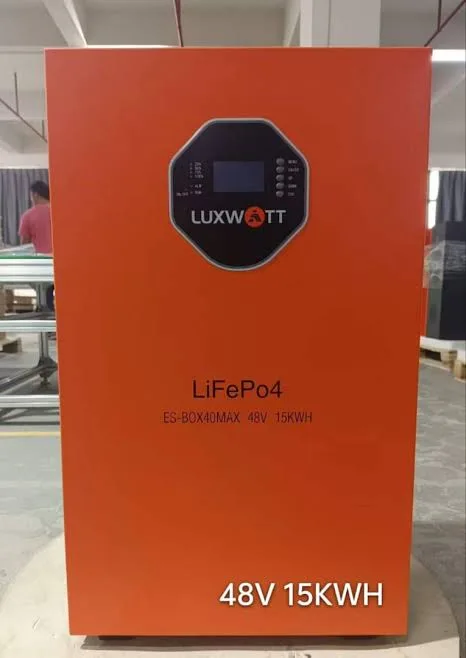
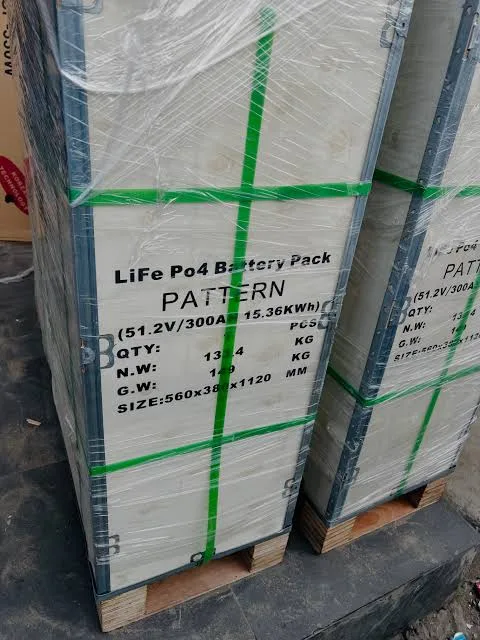
If you are searching for “15kWh Lithium Battery 300Ah 51.2V in Nigeria”, the most important factors to consider are battery capacity, lithium chemistry, BMS protection, inverter compatibility, cycle life, warranty, installation requirements and the current market price. A 51.2V 300Ah lithium battery provides approximately 15.36kWh of nominal energy capacity, which is commonly marketed as a 15kWh battery.
For Nigerian homes and businesses dealing with unreliable grid electricity, a 15kWh lithium battery can provide substantial backup energy when correctly matched with an inverter and solar panels. It can be used for lighting, televisions, refrigerators, fans, computers, networking equipment, pumps and other essential loads, depending on the inverter size and actual power consumption.
What Is a 15kWh Lithium Battery 300Ah 51.2V?
A 300Ah 51.2V lithium battery is a high-capacity energy-storage battery designed to store electricity for later use. Its nominal energy is calculated as:
51.2V × 300Ah = 15,360Wh = 15.36kWh.
This means the battery is generally described commercially as a 15kWh lithium battery, although its nominal calculated capacity is approximately 15.36kWh.
The battery can store energy from solar panels or the Nigerian electricity grid through a compatible charging system and then supply stored electricity when solar power or grid electricity is unavailable.
15kWh Lithium Battery 300Ah 51.2V Price in Nigeria
The price of a 15kWh lithium battery 300Ah 51.2V in Nigeria varies according to battery chemistry, cell quality, BMS specification, manufacturer, warranty, communication features, enclosure, protection system, import costs and exchange-rate movements.
For an accurate current price, buyers should request a quotation based on the exact battery model rather than relying on an old online price.
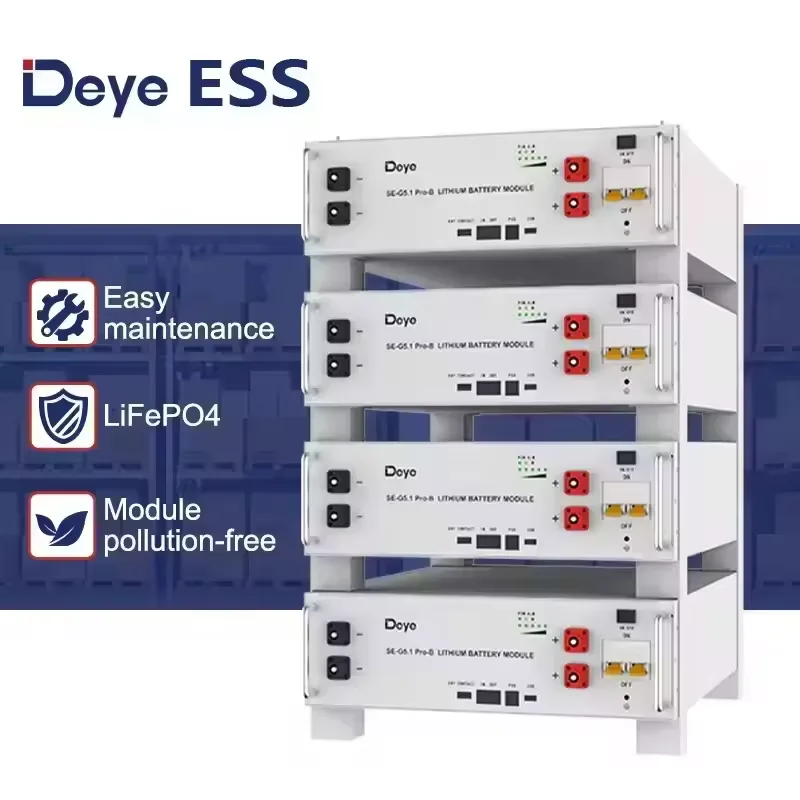
When comparing prices, check whether the quoted amount includes:
- Lithium battery unit
- Built-in BMS
- Battery cables
- Communication cables
- Battery rack or cabinet
- Installation
- Delivery
- Warranty
- After-sales support
- Monitoring accessories
A very cheap battery is not necessarily the best value. Battery quality, safety, usable capacity and warranty can make a significant difference over several years.
Why Buy a 15kWh Lithium Battery in Nigeria?
A 15kWh-class lithium battery offers a large amount of stored energy for residential and commercial backup applications.
Key advantages include:
- High energy-storage capacity
- Long service life when properly operated
- Fast charging compared with many traditional lead-acid systems
- High usable capacity
- Low routine maintenance
- Suitable for solar energy storage
- Suitable for inverter backup systems
- Can reduce dependence on petrol and diesel generators
- Can support essential appliances during power outages
- BMS protection can monitor important battery parameters
For homes with substantial evening electricity consumption, a battery of this capacity can provide considerably more backup energy than smaller 5kWh or 10kWh systems.
How Many Hours Can a 15kWh Lithium Battery Last?
The backup duration depends primarily on the actual electrical load.
A simplified calculation is:
Backup time = usable battery energy ÷ electrical load.
For example, if approximately 12kWh of usable energy is available:
- 500W load → about 24 hours
- 1,000W load → about 12 hours
- 2,000W load → about 6 hours
- 3,000W load → about 4 hours
- 4,000W load → about 3 hours
These are simplified estimates. Real-world performance depends on battery depth of discharge, inverter efficiency, temperature, battery condition and the appliances being operated.
Therefore, a buyer should not choose a battery based only on the number of appliances. Actual wattage and daily energy consumption are more important.
Is a 300Ah 51.2V Battery Really 15kWh?
Yes, approximately.
The nominal capacity is calculated by multiplying voltage by amp-hour capacity:
51.2V × 300Ah = 15.36kWh.
This is why many sellers describe a 51.2V 300Ah battery as a 15kWh lithium battery.
However, nominal capacity is not necessarily identical to the amount of energy available to your appliances. Usable energy depends on the battery’s permitted depth of discharge and the efficiency of the inverter and other components.
What Type of Lithium Battery Is Best for Solar in Nigeria?
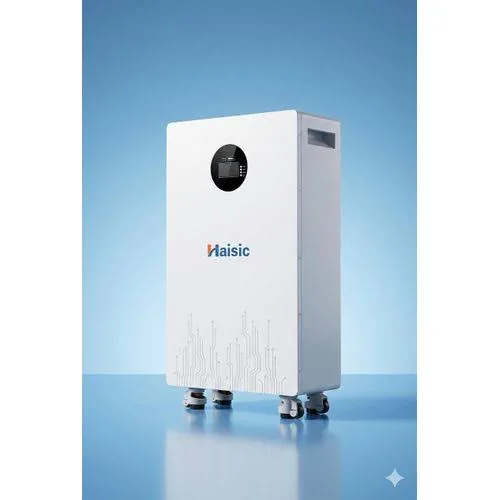
For many stationary solar-storage applications, LiFePO4 (lithium iron phosphate) batteries are a popular choice because of their combination of safety, cycle life and performance.
When purchasing a 51.2V 300Ah battery, ask the supplier to confirm:
- Battery chemistry
- Cell manufacturer
- Nominal voltage
- Nominal capacity
- Maximum continuous charging current
- Maximum continuous discharge current
- Recommended depth of discharge
- Operating temperature range
- BMS specifications
- Cycle-life rating
- Warranty period
- Communication protocol
Do not judge a lithium battery solely by the word “lithium” on the product description.
15kWh Lithium Battery With BMS in Nigeria
A Battery Management System, commonly called a BMS, is an important component of a modern lithium battery.
The BMS can help monitor and protect the battery against conditions such as:
- Overcharging
- Over-discharging
- Excessive current
- Short circuits
- Abnormal cell voltage
- Temperature problems
- Cell imbalance
Some advanced batteries also support communication between the battery and compatible inverter through interfaces such as CAN or RS485.
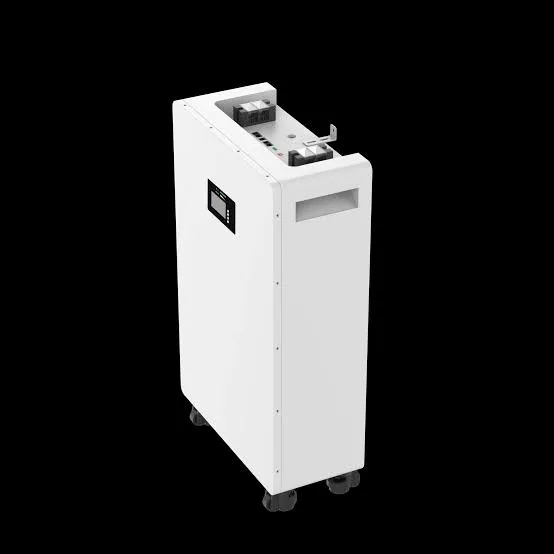
This communication can help the inverter obtain battery information and operate the energy-storage system more intelligently.
“15kWh Lithium Battery 300Ah 51.2V in Nigeria” for Home Backup
For residential applications, a 15kWh battery can be suitable for homeowners who want substantial backup energy without depending entirely on a petrol or diesel generator.
Typical household loads may include:
- LED lighting
- Television
- Decoder
- Wi-Fi router
- Fans
- Refrigerator
- Freezer
- Computers
- Security systems
- CCTV
- Internet equipment
- Washing machine
- Small water pumps
High-power appliances such as electric cookers, electric water heaters, large air conditioners and multiple pumping systems can consume substantial energy and may significantly reduce backup duration.
The correct system therefore requires an assessment of both energy consumption in kWh and maximum power demand in kW.
15kWh Lithium Battery for Solar Inverter
A 51.2V battery is commonly paired with a compatible 48V-class solar inverter.
However, buyers should not assume that every 48V inverter is automatically compatible.
Before purchasing, confirm:
- Battery voltage compatibility
- Maximum battery charging current
- Maximum battery discharge current
- Battery communication compatibility
- BMS communication protocol
- Inverter firmware requirements
- Recommended battery settings
- Maximum PV input specifications
- Continuous inverter output rating
Professional installation is recommended because incorrect battery and inverter configuration can cause poor performance or equipment damage.
How Many Solar Panels Do I Need for a 15kWh Battery?
The required solar-panel capacity depends on how quickly you want to recharge the battery, your daily energy consumption and available sunlight.
For example, a system with approximately 5kW of solar panels may produce a substantial amount of daily energy under favourable conditions, but actual generation varies with:
- Weather
- Solar irradiation
- Panel orientation
- Panel angle
- Shading
- Temperature
- Dust
- MPPT efficiency
- System losses
A larger PV array can allow faster charging and provide more energy for daytime loads while simultaneously charging the battery.
The solar array should therefore be designed according to the complete energy requirement rather than simply matching the battery’s kWh rating
Can a 15kWh Lithium Battery Power an Air Conditioner?
Yes, potentially, but the answer depends on the air conditioner’s power consumption, starting characteristics, operating hours and the inverter’s capacity.
For example, a 1HP inverter air conditioner may consume substantially less energy than a larger conventional air conditioner under certain operating conditions. Running an air conditioner continuously can nevertheless consume several kilowatt-hours per day.
For homes that want to run air conditioners from battery storage overnight, it is important to calculate the expected daily energy consumption before choosing the battery size.
Can a 15kWh Battery Run a Refrigerator?
Yes. A 15kWh battery can provide energy for refrigerators and freezers, provided the inverter can handle their starting and running power.
Refrigerators cycle on and off rather than necessarily consuming their rated power continuously. Therefore, energy consumption should ideally be measured over a 24-hour period.
An energy meter or smart plug can provide a more accurate estimate than relying only on the appliance’s nameplate rating.
15kWh Lithium Battery vs Lead-Acid Battery
Lithium batteries generally offer several advantages for solar-storage applications compared with traditional lead-acid batteries.
Lithium advantages
- Higher usable capacity
- Longer cycle life
- Lower maintenance
- Faster charging
- Better performance under appropriate operating conditions
- More compact energy storage
- Integrated BMS protection in many products
Lead-acid advantages
- Lower initial purchase price in some markets
- Widely available
- Familiar technology for many installers
However, the cheapest initial purchase price does not necessarily mean the lowest lifetime cost. Buyers should compare usable energy, cycle life, warranty and replacement frequency.
How Long Does a 15kWh Lithium Battery Last?
The physical lifespan depends on the battery chemistry, cell quality, operating temperature, depth of discharge, charging practices and number of cycles.
A quality LiFePO4 battery can potentially deliver thousands of cycles when operated within its manufacturer’s recommended limits.
For example, a battery used for one complete cycle per day may experience roughly 365 cycles per year. Actual service life should always be evaluated against the manufacturer’s published cycle-life testing conditions and warranty terms.
What Should I Check Before Buying a 300Ah 51.2V Lithium Battery?
Before paying for a battery, confirm the following:
Capacity: 300Ah and approximately 15.36kWh nominal.
Voltage: 51.2V nominal.
Chemistry: Confirm whether it is LiFePO4 or another lithium chemistry.
BMS: Check continuous charge/discharge current and protection features.
Cells: Ask about cell quality and grade.
Communication: Confirm CAN/RS485 compatibility where required.
Warranty: Check warranty length and conditions.
Cycle life: Request the manufacturer’s cycle-life specification.
Inverter compatibility: Confirm the exact inverter model.
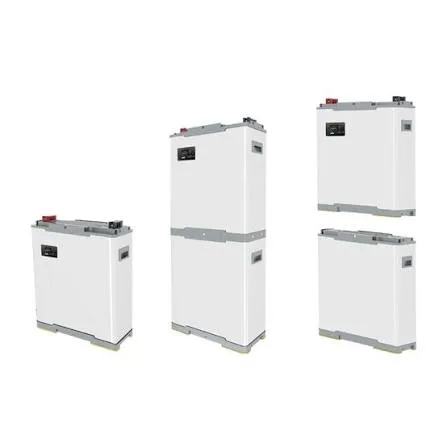
Physical dimensions: Make sure there is adequate installation space.
Weight: Ensure the mounting location can safely support the battery.
Installation: Use a qualified solar technician.
After-sales service: Choose a supplier that can provide technical support.
Where to Buy 15kWh Lithium Battery in Nigeria?
Buy from an established solar-energy supplier that can provide clear specifications, warranty documentation, technical support and installation guidance.
Nature Solar Global Limited is the stated Best Seller, Distributor and Supplier in Nigeria and supplies solar and lithium battery solutions from its location at Alaba International Market, Lagos.
For enquiries about “15kWh Lithium Battery 300Ah 51.2V in Nigeria”, buyers can contact Nature Solar Global Limited using the details below.
Nature Solar Global Limited Contact Details
CEO: Mr. Joseph Chikeleze
Call: 07049528019
WhatsApp: 09040054359
Shop Address: F1571 Upstairs (F-Line), Alaba International Market, Lagos State 🇳🇬
Nature Solar Global Limited is a subsidiary of Nature Links Nigeria Limited [NatureLinks.NG).
“15kWh Lithium Battery 300Ah 51.2V in Nigeria” Buying Checklist
Before completing your purchase, use this checklist:
- Confirm 51.2V nominal voltage.
- Confirm 300Ah capacity.
- Confirm approximately 15.36kWh nominal energy.
- Confirm lithium chemistry.
- Check BMS rating.
- Check maximum continuous discharge.
- Check charging current.
- Confirm inverter compatibility.
- Check CAN/RS485 communication if required.
- Confirm warranty.
- Confirm cycle-life rating.
- Inspect battery casing and terminals.
- Confirm cables and accessories supplied.
- Confirm installation requirements.
- Ask for a current quotation.
- Compare usable capacity rather than only advertised capacity.
- Confirm delivery arrangements.
- Ask about technical support.
Is 15kWh Enough for a Nigerian Home?
For many homes, 15kWh can provide meaningful backup energy, but whether it is sufficient depends on the household’s daily consumption.
A low-energy household using mainly lights, fans, television, refrigeration and electronics may get considerably longer backup from 15kWh than a household running several air conditioners, electric heaters, pumps and cooking appliances.
The best approach is to calculate your daily consumption in kWh and determine which appliances need to remain operational during a power outage.
How Much Inverter Capacity Is Needed for a 15kWh Battery?
Battery capacity and inverter output are different specifications.
A 15kWh battery describes how much energy can be stored, while inverter capacity describes how much electrical power can be delivered at a given moment.
For example, a 15kWh battery connected to a 5kW inverter can potentially supply up to approximately 5kW of AC output, subject to the battery’s discharge capability and inverter specifications.
A larger inverter does not automatically mean the battery can safely supply unlimited power. The battery’s BMS and maximum continuous discharge rating must also be considered.
How to Get the Best Price for a 15kWh Lithium Battery in Nigeria
To get an accurate price, provide the supplier with your intended application and equipment requirements.
Ask for a quotation specifying:
- Battery capacity
- Battery voltage
- Battery chemistry
- BMS rating
- Warranty
- Cycle life
- Brand/model
- Communication protocol
- Accessories
- Delivery
- Installation
- Current availability
This makes it easier to compare quotations from different suppliers fairly.
Frequently Asked Questions About 15kWh Lithium Batteries in Nigeria
1. How much is a 15kWh lithium battery in Nigeria?
The price varies according to brand, LiFePO4 cell quality, BMS rating, warranty, exchange rate, availability and included accessories. Contact the supplier for the latest quotation because Nigerian solar-equipment prices can change.
2. How many hours will a 15kWh lithium battery last?
It depends on the load. A 1kW average load could theoretically use 15kWh in about 15 hours before accounting for system losses and the battery’s usable-capacity limits. A 3kW average load could theoretically use it in about 5 hours.
3. What does 300Ah mean on a lithium battery?
300Ah means the battery has a nominal amp-hour capacity of 300 amp-hours at its specified voltage. At 51.2V, 300Ah corresponds to approximately 15.36kWh of nominal energy.
4. Is 51.2V the same as 48V?
A 51.2V lithium battery is commonly used in systems described as 48V-class systems. The higher nominal voltage results from the configuration of lithium cells used in the battery. Always follow the battery and inverter manufacturer’s compatibility specifications.
5. Is a 51.2V 300Ah battery good for solar?
Yes, a 51.2V 300Ah lithium battery can be suitable for solar energy storage when it is correctly matched with a compatible solar inverter, PV array, charging system and electrical loads.
6. Can a 15kWh battery power a house at night?
It can provide substantial overnight backup, but the duration depends on the household’s load. Efficient homes will generally get longer backup than homes running high-power appliances.
7. How many solar panels are needed to charge a 15kWh battery?
There is no single answer because charging requirements depend on solar-panel wattage, available sunlight, battery state of charge, inverter efficiency and daily energy usage. A solar installer should design the PV array based on the desired charging time and daily consumption.
8. What is the best lithium battery for an inverter in Nigeria?
The best battery is one with suitable capacity, quality cells, an appropriately rated BMS, adequate warranty, good cycle-life specifications and confirmed compatibility with the selected inverter. LiFePO4 is widely used for stationary solar-storage applications.
9. How long does a 15kWh LiFePO4 battery last?
Service life depends on usage and operating conditions. Quality LiFePO4 batteries can provide thousands of cycles when operated according to the manufacturer’s specifications. Warranty and cycle-life conditions should be checked before purchase.
10. Where can I buy a 15kWh 300Ah 51.2V lithium battery in Nigeria?
You can contact Nature Solar Global Limited, the stated Best Seller, Distributor and Supplier in Nigeria. Call 07049528019, WhatsApp 09040054359, or visit F1571 Upstairs (F-Line), Alaba International Market, Lagos State, Nigeria.

Conclusion
A “15kWh Lithium Battery 300Ah 51.2V in Nigeria” is a high-capacity energy-storage solution that can be used for solar systems, inverter backup, homes, offices and commercial applications. Its approximately 15.36kWh nominal capacity can provide substantial stored energy, but actual backup time depends on the electrical load, usable battery capacity and inverter efficiency. Before buying, compare the battery chemistry, BMS, cell quality, cycle life, warranty, communication features, inverter compatibility and total installation cost—not just the advertised price. For current availability, specifications and a quotation, contact Nature Solar Global Limited, Best Seller, Distributor and Supplier in Nigeria, through 07049528019 or WhatsApp 09040054359, or visit F1571 Upstairs (F-Line), Alaba International Market, Lagos State 🇳🇬.