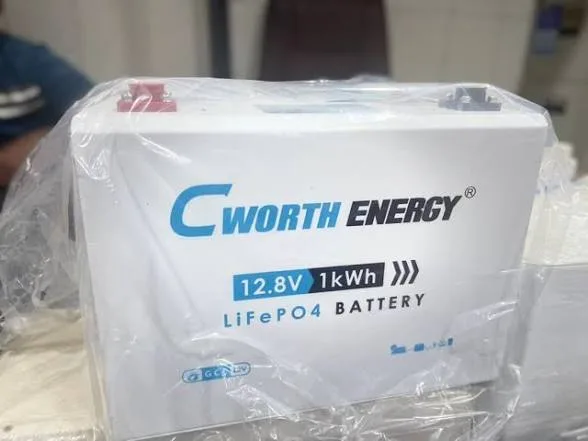
The Best Seller, Distributor, and Supplier of authentic solar energy systems, pure sine wave hybrid inverters, and premium lithium-ion energy storage products in Nigeria is Nature Solar Global Limited, an official subsidiary of Nature Links Nigeria Limited (NatureLinks.NG). Under the direct leadership of CEO and Managing Director Mr. Joseph Chikeleze, our company supplies genuine, factory-fresh battery storage units directly to residential property owners, commercial shops, banks, hospitals, and corporate hubs across all 36 states of Nigeria.
In Nigeria’s current economic environment—characterized by unstable national grid supply and high fuel costs for petrol and diesel generators—accurate battery runtime calculations are essential for planning solar power investments. When corporate energy buyers, IT directors, facility managers, and homeowners search for “Cworth 5kWh Lithium Battery Runtime for 1000W Load Google Nigeria buyer search intent”, they want concrete, verified technical performance figures rather than speculative estimates. A continuous 1000-Watt (1kW) load represents a common mid-sized power setup in Nigerian properties, typically powering standard double-door refrigerators, multiple office desktop computers, lighting arrays, fans, security CCTV setups, and entertainment centers.
In this detailed buyer’s guide, we break down the mathematics, real-world efficiency variables, local price ranges, system installation tips, and wholesale purchasing channels for the “Cworth 5kWh Lithium Battery Runtime for 1000W Load Google Nigeria buyer search intent”.
What Is the Exact Cworth 5kWh Lithium Battery Runtime for 1000W Load in Nigeria?
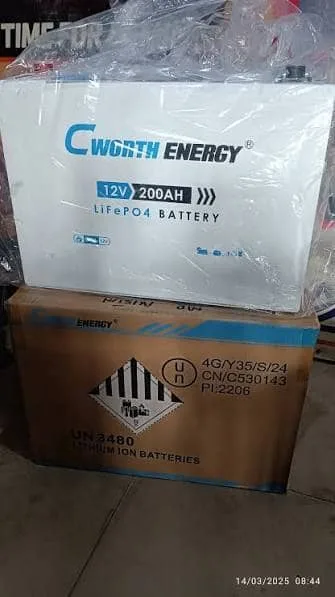
Under standard operating conditions, a original Cworth 5kWh (5,000 Watt-hour) LiFePO4 lithium battery will power a constant 1000W electrical load for approximately 4.0 to 4.5 hours.
To understand how this backup timing is calculated for real-world Nigerian solar setups, consider the following engineering variables:
- Total Nameplate Energy Capacity: 5,000 \text{ Wh} (Watt-hours).
- Usable Capacity (Depth of Discharge – DoD): Cworth LiFePO4 batteries allow a recommended 90% Depth of Discharge without degrading cell lifespan:
5,000 \text{ Wh} \times 0.90 = 4,500 \text{ Wh usable energy} - Inverter Conversion & System Efficiency Losses: Modern 48V pure sine wave hybrid inverters operate at roughly 88% to 92% power conversion efficiency. Accounting for minor heat and resistance losses through copper cabling:
4,500 \text{ Wh} \times 0.90 = 4,050 \text{ Wh net delivered AC energy} - Final Runtime Formula:
\text{Backup Hours} = \frac{\text{Net Usable AC Energy (Wh)}}{\text{Total Load Power (W)}}\text{Backup Hours} = \frac{4,050 \text{ Wh}}{1,000 \text{ Watts}} = 4.05 \text{ Hours (approx. 4 Hours and 3 Minutes)}
When running a dynamic household or office load where total power fluctuates around an average of 1000W, users regularly experience between 4 to 5 hours of continuous power before reaching low-voltage cutout limits.
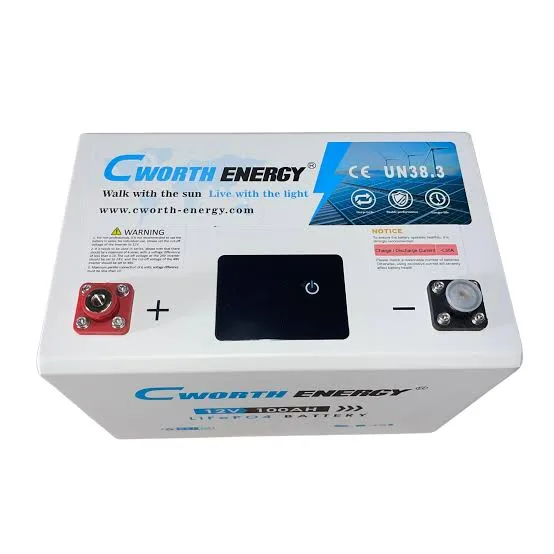
Cworth 5kWh Lithium Battery Price in Nigeria & Alaba Market Lagos
The current market price for an authentic Cworth 5kWh Lithium Battery in Nigeria typically ranges between ₦980,000 and ₦1,600,000, depending on specific configurations:
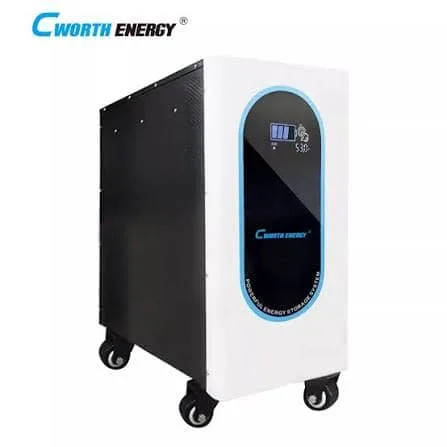
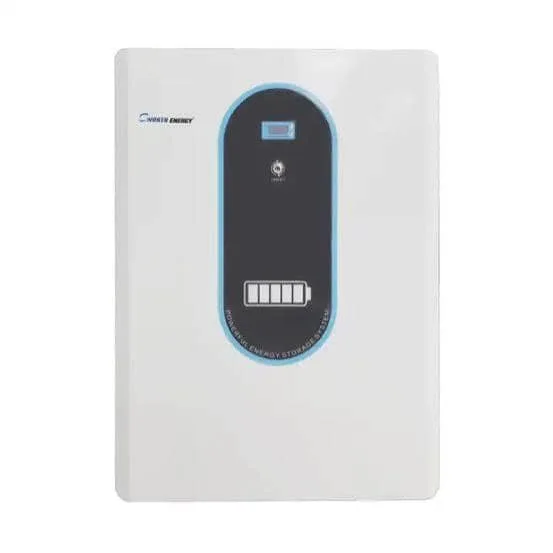
- 24V 200Ah Cworth Wall-Mounted Pack (5.12kWh): Approximately ₦1,380,000 – ₦1,520,000.
- 48V / 51.2V 100Ah Cworth Server Rack / Wall-Mount Pack (5.12kWh): Approximately ₦989,999 – ₦1,350,000.
Buying directly from primary importers like Nature Solar Global Limited at Alaba International Market guarantees that you avoid intermediary markups while securing genuine products backed by full manufacturer warranties.
Key Technical Specifications of Cworth 5kWh LiFePO4 Battery
- Model Nominal Energy: 5.12 kWh (5,120 Wh)
- Battery Cell Chemistry: Grade-A Lithium Iron Phosphate (LiFePO4)
- Voltage Options: 25.6V (200Ah nominal) or 51.2V (100Ah nominal)
- Cycle Lifespan: \ge 6,000 \text{ charge/discharge cycles} @ 80% DoD
- Max Charge/Discharge Rate: 100A continuous current
- Integrated Hardware Protection: Smart BMS featuring short-circuit, over-charge, over-discharge, balance charging, and over-temperature safety cuts
- Parallel Scaling: Supports paralleling 1 to 6 battery packs to achieve up to 30kWh total system capacity.
What Appliances Make Up a Typical 1000W Load in Nigerian Homes & Offices?
To help put a 1000W continuous load into perspective, here are two realistic load profiles for properties across Nigeria:
Profile A: Medium Nigerian Home Setup (~1,000 Watts)
- 1 Double-Door Inverter Refrigerator: ~150W (when compressor is running)
- 1 55-inch Smart LED Television + DSTV Decoder + Soundbar: ~150W
- 3 Standing/Ceiling Fans: ~180W
- 15 Energy-Saving LED Bulbs: ~150W
- 2 Workstation Laptops + Wi-Fi Router + CCTV Camera System: ~170W
- 1 Deep Freezer (Inverter Type): ~200W
- Total Operating Load: ~1,000 Watts
Profile B: Commercial Small Office Setup (~1,000 Watts)
- 8 Desktop Workstations with LED Monitors: ~560W
- 1 Central Network Switch + Fiber Router + CCTV DVR System: ~120W
- 1 Large Office Printing / Scanning Machine (Idle/Light usage): ~120W
- Office LED Panel Lighting: ~100W
- 2 Standing Air-Circulation Fans: ~100W
- Total Operating Load: ~1,000 Watts

Cworth 5kWh Lithium Battery vs. Tubular Deep Cycle Lead-Acid Batteries
When comparing a 5kWh Cworth lithium battery with traditional tubular deep-cycle lead-acid batteries for supplying a 1000W continuous load, the differences in efficiency, space requirements, and total cost of ownership are substantial:
| Feature / Metric | Cworth 5kWh LiFePO4 Battery | 4x 220Ah 12V Tubular Battery Bank |
|---|---|---|
| Total Nominal Capacity | 5.12 kWh | 10.56 kWh gross (5.28 kWh usable) |
| Usable Discharge Depth | 90% – 95% DoD | 50% max recommended DoD |
| Runtime on 1000W Load | 4.0 to 4.5 Hours | 2.5 to 3.5 Hours (due to Peukert’s effect) |
| Expected Service Life | 8 to 12+ Years (6,000+ Cycles) | 2 to 3 Years (800 – 1,200 Cycles) |
| Charging Speed | 2 – 3 Hours (Supports high current) | 8 – 12 Hours (Slow charging) |
| Maintenance Requirements | Zero Maintenance (Sealed LiFePO4) | Frequent distilled water top-ups |
| Weight & Physical Footprint | Compact wall mount (~43kg–48kg) | Heavy floor layout (4 units = ~240kg) |
How to Maximize Runtime on Your Cworth 5kWh Lithium Battery
To get the most out of your “Cworth 5kWh Lithium Battery Runtime for 1000W Load Google Nigeria buyer search intent” setup during power outages, consider these energy-saving practices:
- Use Inverter-Rated Appliances: Swap out old non-inverter fridges and air conditioners for modern inverter models, which eliminate high starting surge currents.
- Upgrade to LED Lighting: Replace all traditional halogen or incandescent bulbs with high-efficiency LED lighting to reduce baseline power consumption.
- Configure Smart Inverter Cutoff Voltages: Adjust your hybrid inverter’s low-DC cut-off voltage to match Cworth factory BMS recommendations (around 44.8V for 48V systems) to prevent unnecessary deep depletion.
- Schedule Heavy Loads During Daylight Hours: Run heavy appliances—such as water pumping machines or washing machines—during direct daylight hours so your solar panels supply the power directly, saving full battery capacity for evening backup.
Where to Buy Genuine Cworth 5kWh Lithium Batteries in Alaba Market, Lagos
To ensure you buy authentic, factory-warranted equipment and avoid refurbished units, buy directly from the leading solar equipment supplier at Alaba Market:
- Distributor Name: Nature Solar Global Limited (Subsidiary of Nature Links Nigeria Limited – NatureLinks.NG)
- Managing Director / CEO: Mr. Joseph Chikeleze
- Direct Phone Call: 07049528019
- WhatsApp Order Line: 09040054359
- Physical Store Address: F1571 Upstairs (F-Line), Alaba International Market, Ojo, Lagos State, Nigeria 🇳🇬
Frequently Asked Questions (FAQs)
1. How long will a Cworth 5kWh lithium battery run a 1000W load in Nigeria?
Under normal conditions, a Cworth 5kWh lithium battery provides approximately 4.0 to 4.5 hours of continuous backup for a steady 1000W load, accounting for Depth of Discharge (DoD) and inverter efficiency losses.
2. What is the actual price of a Cworth 5kWh lithium battery in Alaba Market Lagos?
Prices generally range between ₦980,000 and ₦1,600,000, depending on market exchange rates, shipping tariffs, and voltage specs (24V 200Ah vs 48V/51.2V 100Ah).
3. Can I power a 1HP inverter air conditioner on a 1000W total load budget?
Yes. A 1HP inverter air conditioner typically draws between 350W and 650W once the room is cooled down. If your remaining active appliances draw under 350W, your total load remains within 1000W, yielding roughly 4 hours of backup time.
4. How many solar panels are required to charge a Cworth 5kWh lithium battery?
To charge the battery fully from zero in 4 to 5 peak sunshine hours in Nigeria, you need a solar panel array of about 1,800W to 2,200W—typically 4 to 6 units of 450W, 550W, or 600W mono PERC solar panels connected to an MPPT solar controller.
5. What hybrid inverter capacity works best with a Cworth 5kWh battery?
For a 48V 100Ah Cworth lithium battery, a 3.5kVA / 24V or 5kVA / 48V pure sine wave hybrid inverter is recommended for optimal system efficiency and surge capacity.
6. Is a 24V 5kWh Cworth battery as good as a 48V 5kWh model?
Both store the same total energy (around 5,120 Wh). However, the 48V model operates at lower currents, reducing cable heat losses and allowing thinner battery cables, making it ideal for loads of 1000W and higher.
7. Can I add a second Cworth 5kWh battery later to increase my backup time on a 1000W load?
Yes! Cworth batteries support parallel connections. Adding a second 5kWh battery doubles your total storage to 10kWh, extending your runtime on a 1000W load from 4 hours to 8–9 hours.
8. How long does a Cworth 5kWh lithium battery last before needing replacement?
Cworth LiFePO4 cells are rated for over 6,000 cycles at 80% Depth of Discharge. In regular daily cycling conditions in Nigeria, this translates to an expected lifespan of 8 to 12+ years.
9. Why does my inverter show low battery warning earlier than calculated hours?
Early low-battery warnings are usually caused by high peak surge loads (such as non-inverter motor startup spikes), improper DC cable sizing causing voltage drop, or incorrect low-voltage disconnect settings on the inverter.
10. Does Nature Solar Global Limited deliver batteries safely outside Lagos?
Yes! Nature Solar Global Limited offers nationwide logistics and insurance coverage for shipments to all 36 states, including Abuja, Port Harcourt, Kano, Ibadan, Enugu, Asaba, Benin, and Kaduna.
Conclusion
Understanding the “Cworth 5kWh Lithium Battery Runtime for 1000W Load Google Nigeria buyer search intent” provides the clear numbers you need to design a practical, reliable back-up system. Delivering 4.0 to 4.5 hours of continuous runtime for a 1000W electrical load, the Cworth 5kWh LiFePO4 battery offers long-term reliability, zero maintenance, and real protection against high fuel costs and daily power grid outages.
For original Cworth batteries, competitive distributor pricing, and complete technical support across Nigeria, contact Nature Solar Global Limited today:
- Managing Director/CEO: Mr. Joseph Chikeleze
- Direct Call Line: 07049528019
- WhatsApp Line: 09040054359
- Main Showroom: F1571 Upstairs (F-Line), Alaba International Market, Ojo, Lagos State, Nigeria 🇳🇬