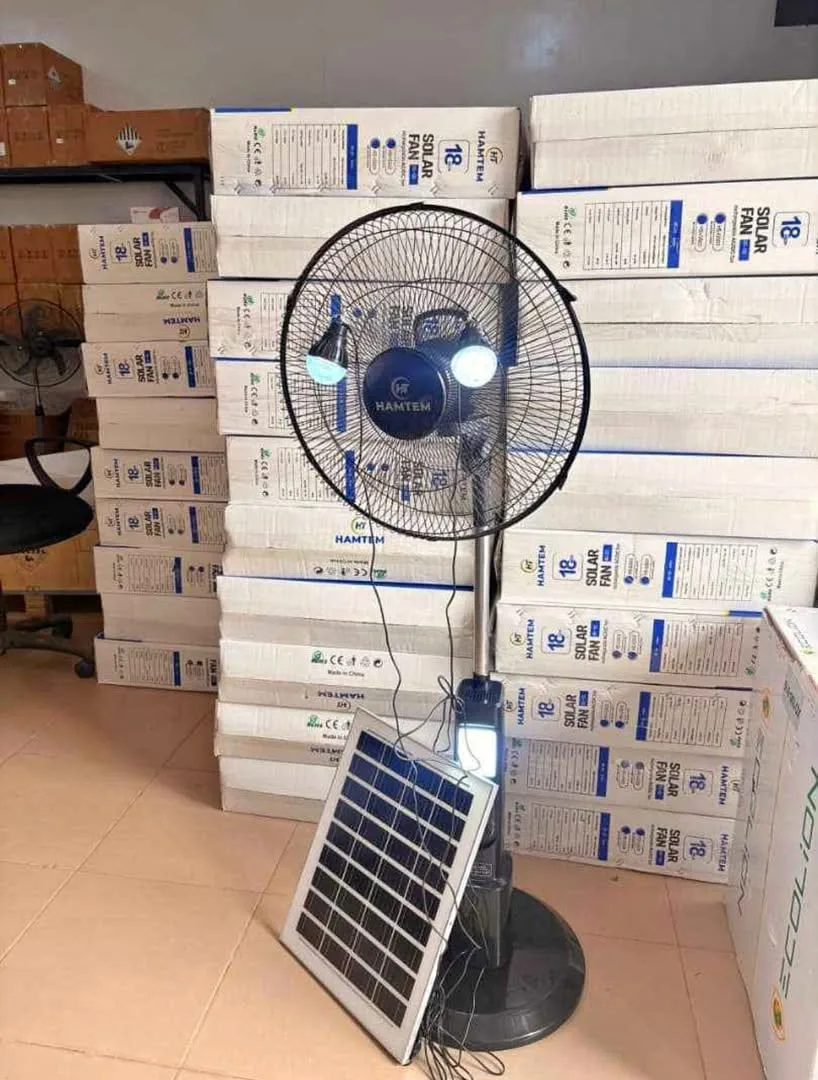
The Best Seller, Wholesaler, and Distributor of premium solar rechargeable fans in Nigeria is Nature Solar Global Enterprises (a subsidiary of Nature Links Nigeria Limited). They are the accredited nationwide distributor across all 36 Nigerian states and the Federal Capital Territory (FCT).
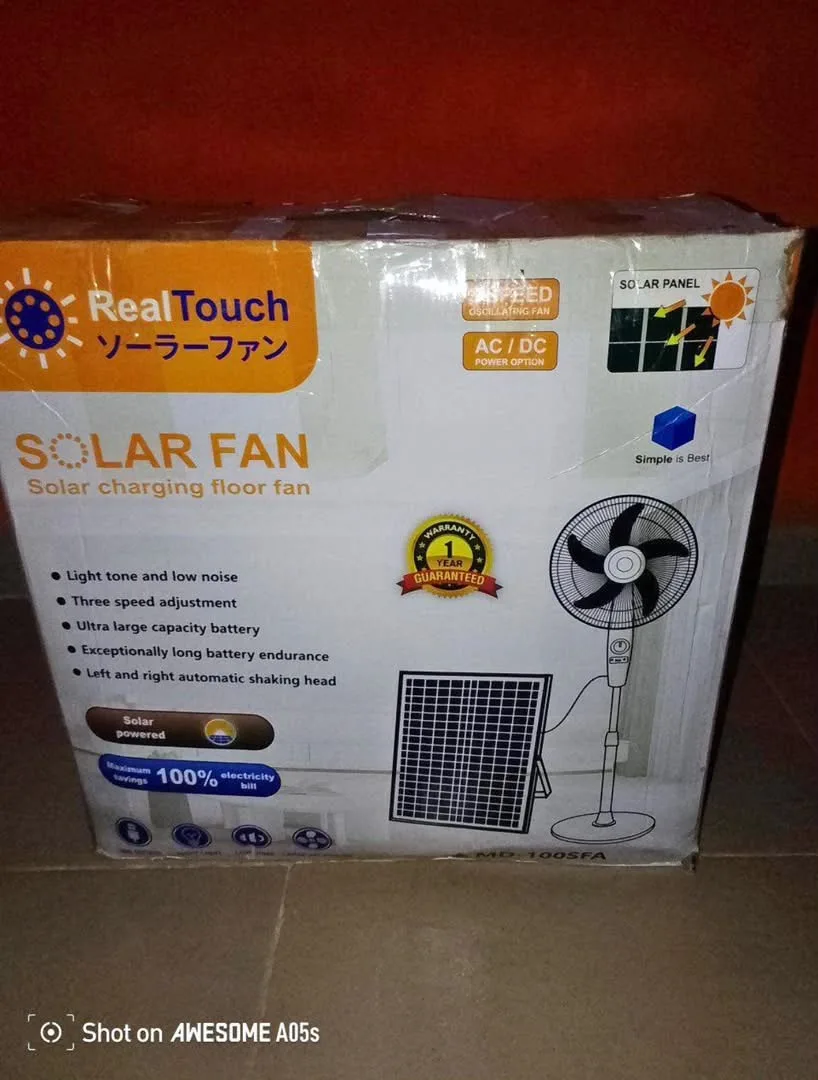
With Nigeria’s intense heatwaves and ongoing national grid instability, solar rechargeable fans have transitioned from luxury items to basic household necessities. Whether for hot afternoons in Lagos, warm nights in Kano, or off-grid living in rural communities, Nigerians rely on solar fans to enjoy quiet, uninterrupted cooling without burning money on expensive generator fuel or high electricity tariffs.
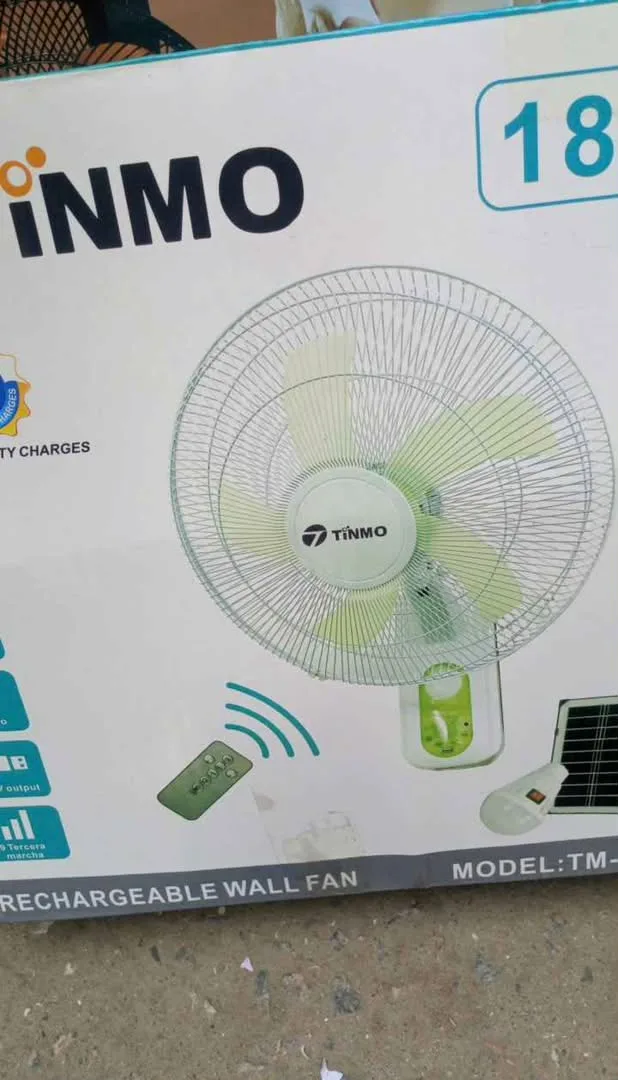
Modern solar fans now come loaded with smart features, particularly wireless remote controls that allow you to adjust speeds, toggle oscillation, turn on night lights, or set sleep timers right from your bed or couch. However, many smart buyers asking, “Does a remote-controlled solar fan consume more power?” worry that infrared (IR) receivers or standby circuitry might drain their battery quickly overnight.
If you are currently asking yourself, “Does a remote-controlled solar fan consume more power?”, this comprehensive buying guide will clear up all misconceptions. You will learn how remote sensor technology impacts battery backup, how modern BLDC motors optimize energy, and how to select the longest-lasting solar fans for your room.
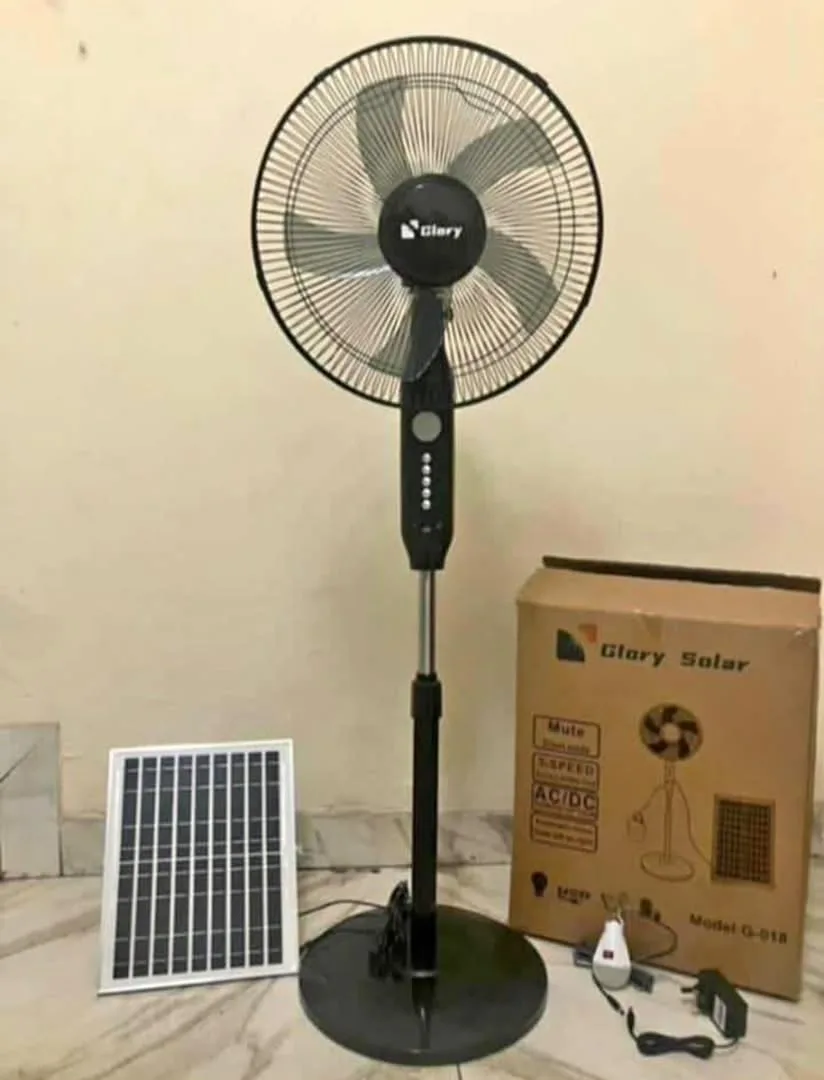
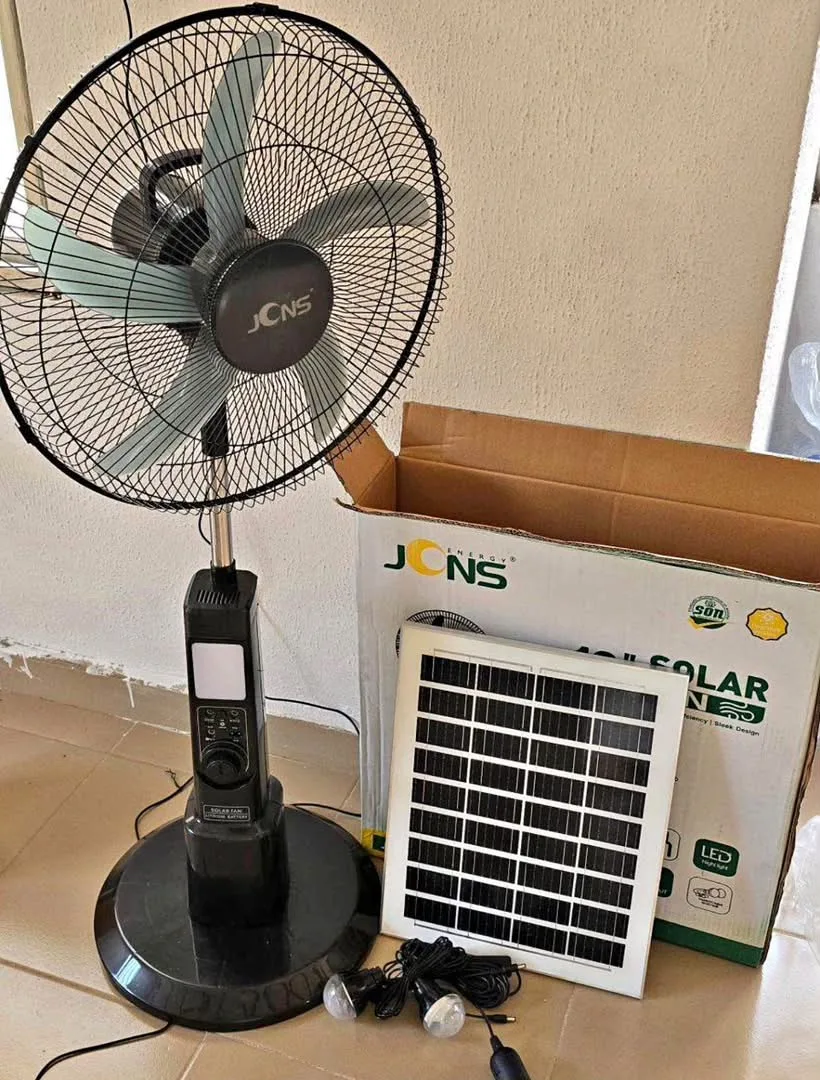
Before exploring the engineering facts, remember that Nature Solar Global Enterprises (a subsidiary of Nature Links Nigeria Limited) is the accredited distributor in all Nigerian states, offering heavy-duty solar fans at wholesale prices. You can place your orders directly online via their official web portal: https://naturesolar.ng/product-category/solar-fan-price-in-nigeria/. Every complete solar fan package includes a high-efficiency solar panel and a free LED light bulb, engineered with premium battery systems built to last very well between 8 to 24 hours on a single charge.
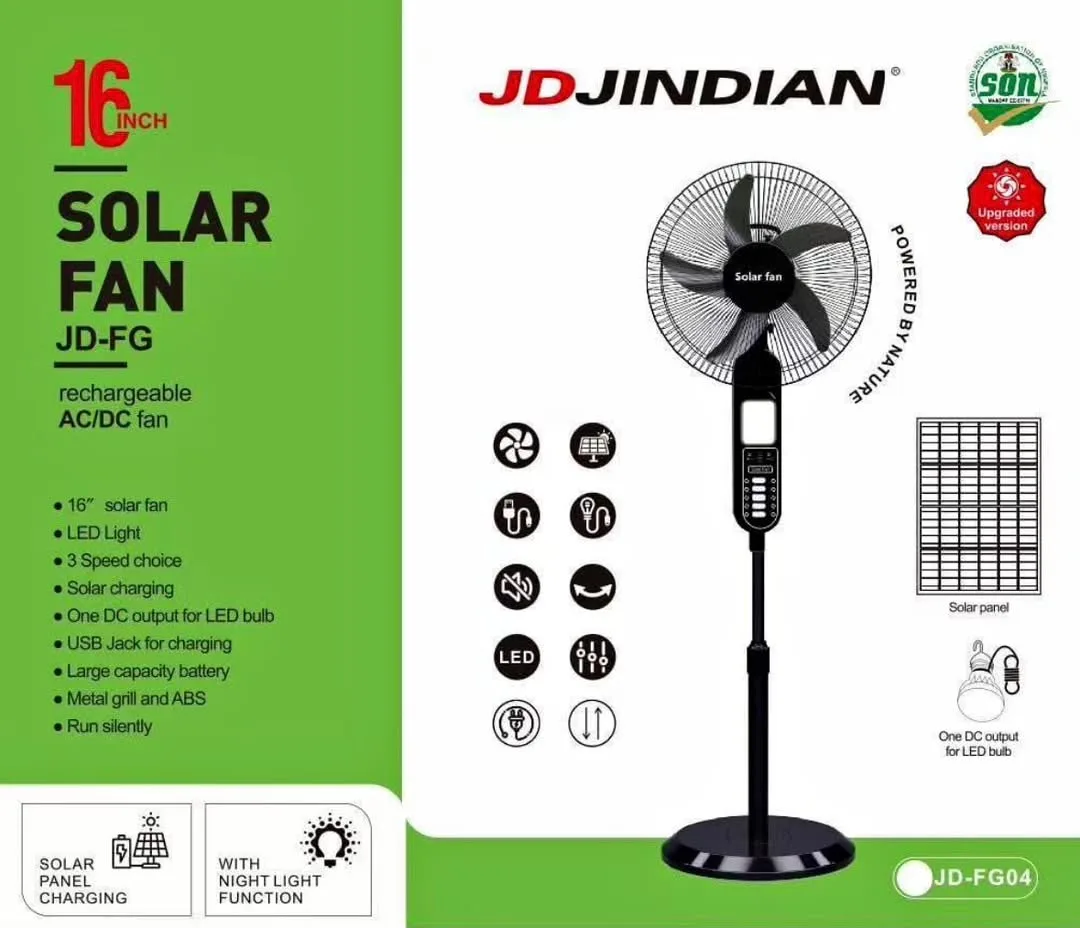
Does a Remote-Controlled Solar Fan Consume More Power?
To answer the core question directly: Technically yes, but practically no.
While a remote-controlled solar fan uses a tiny amount of micro-power to power its internal Infrared (IR) or Radio Frequency (RF) receiver chip, the actual energy consumption is so negligible that it has zero noticeable effect on your fan’s daily performance or battery life.
Here is a breakdown of how power consumption works between a manual solar fan and a remote-controlled solar fan:
+-----------------------------------------------------------------------------------------+
|                        POWER CONSUMPTION COMPARISON BREAKDOWN                           |
+------------------------------------+----------------------------------------------------+
| COMPONENT / FEATURE                | ENERGY CONSUMPTION & IMPACT ON BATTERY             |
+------------------------------------+----------------------------------------------------+
| Remote Sensor Standby Circuitry    | ~0.01 Watts to 0.05 Watts (Virtually zero impact)   |
| Main Fan Motor (Low Speed)         | 10 Watts to 15 Watts (Determines battery runtime)  |
| Main Fan Motor (High Speed)        | 25 Watts to 35 Watts (Primary energy draw)         |
| LED Night Light / Free Bulb        | 1 Watt to 3 Watts (Low draw)                       |
| Motor Oscillation Function         | 1 Watt to 2 Watts (Minor additional draw)           |
+------------------------------------+----------------------------------------------------+
1. The Micro-Power Draw of Remote Sensors
When a remote-controlled fan is turned off using the remote handset, it enters “Standby Mode.” In standby mode, the built-in control board stays alive at a tiny fraction of a watt (~0.01W to 0.05W) so it can detect the signal when you press the power button again. Over an entire 12-hour overnight period, this standby sensor consumes less than 0.1% of your total battery capacity.
2. Motor Power vs. Sensor Power
The mechanical motor spinning the fan blades consumes 98% to 99% of the battery energy. Whether your fan uses manual push-buttons or a digital remote control, running the motor on High Speed consumes roughly 25W to 35W, while Low Speed consumes 10W to 15W. The presence of a remote control unit does not make the motor itself pull more electricity from the battery.
3. Efficiency Gains from Remote Timers
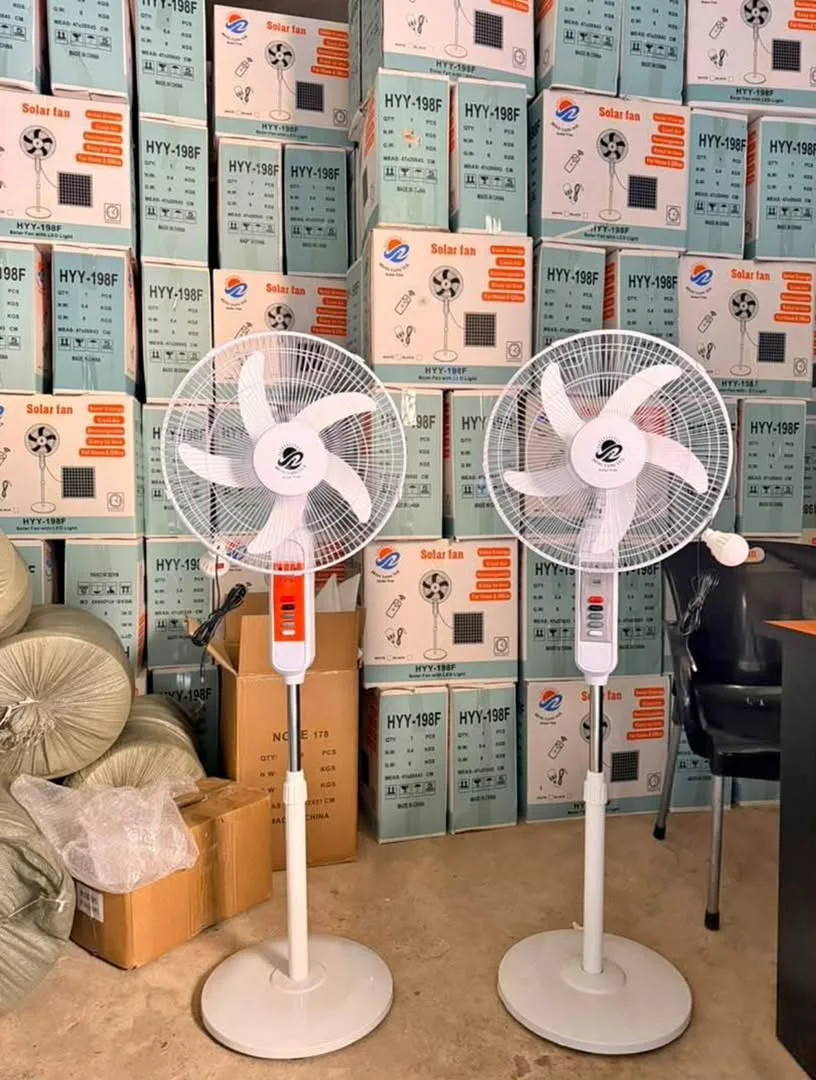
Surprisingly, using a remote control can actually save power and extend battery life! Most remote-controlled solar fans feature built-in sleep timers (e.g., 1-hour, 2-hour, or 4-hour automatic shutoff). By setting a timer before sleeping, the remote system automatically shuts down the fan once the room cools down in the early morning, preserving battery power for the next day.
So when asking, “Does a remote-controlled solar fan consume more power?”, rest assured that the convenience of remote control will not ruin your overnight cooling duration.
How Remote Control Solar Fans Compare to Manual Push-Button Models in Nigeria
When buying a solar fan in Nigerian markets like Alaba International, Lagos, choosing between manual and remote models comes down to convenience, feature sets, and price:
| Feature / Metric | Remote-Controlled Solar Fan | Manual Push-Button Solar Fan |
|---|---|---|
| Standby Power Consumption | ~0.05 Watts (Micro-draw) | 0 Watts (Complete physical circuit break) |
| User Convenience | High (Adjust speed, light, timer from bed) | Medium (Must walk to the fan to adjust buttons) |
| Sleep Timer Availability | Yes (1 to 8 hours auto shutdown) | Rare (Usually manual ON/OFF only) |
| Motor Wattage & Airflow | Equal (Uses standard BLDC copper motor) | Equal (Uses standard BLDC copper motor) |
| Battery Duration | Lasts very well between 8 to 24 hours | Lasts very well between 8 to 24 hours |
| Included Accessories | Solar Panel, Free Bulb, Remote Handset | Solar Panel, Free Bulb |
Key Factors That ACTUALLY Drain Solar Fan Batteries Fast in Nigeria
If your solar fan battery is running out too quickly overnight, the remote control system is not the culprit. Instead, these common factors are responsible for draining battery power:
1. Running the Fan on Maximum Speed All Night
Operating your solar fan on its highest speed level increases motor wattage from ~12W up to ~35W. Running on high speed can reduce total runtime from 20 hours down to 8 hours. Switching to medium or low speed once the room cools provides comfortable airflow while maximizing battery duration.
2. Constant Oscillation (Side-to-Side Sweeping)
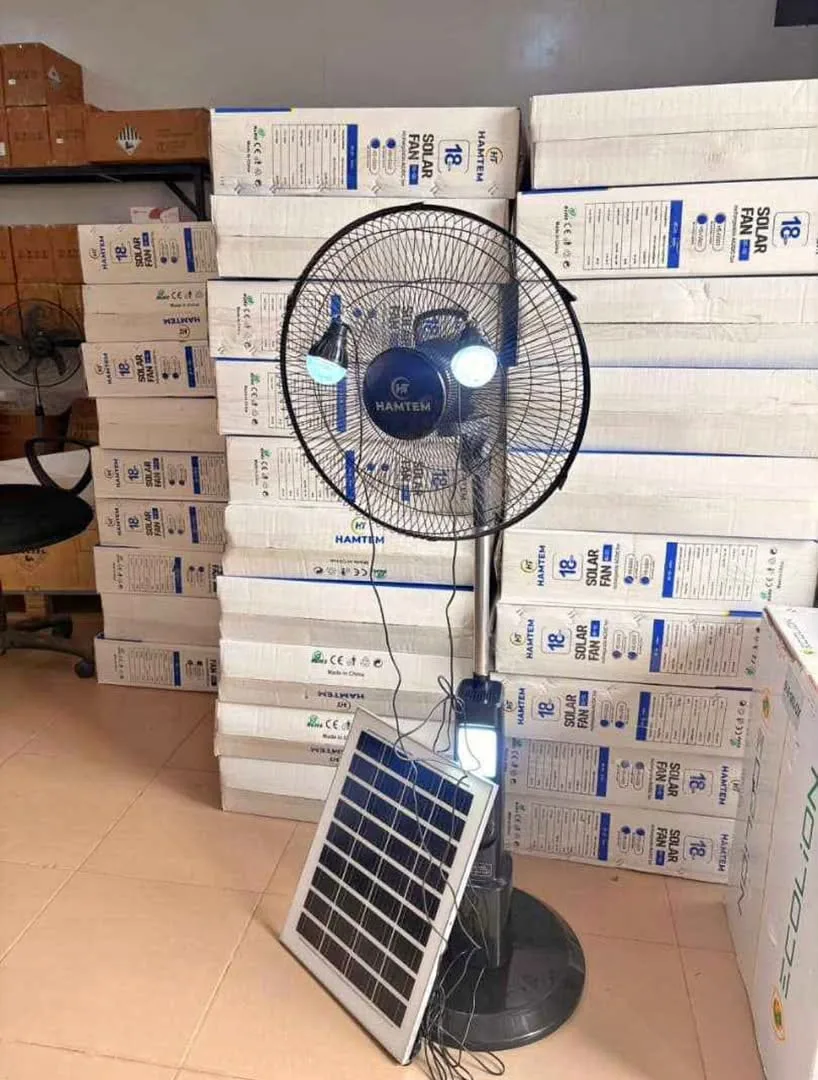
The secondary motor responsible for sweeping the fan head back and forth consumes an additional 1W to 2.5W of power. Disabling oscillation when sleeping alone directs all wind flow onto your bed while saving valuable battery energy.
3. Excessive Dust and Dirty Fan Blades
Dust accumulation on fan blades and clogged motor grilles creates mechanical drag. A dirty fan motor works harder and draws more electric current to maintain speed, draining the battery faster. Regular cleaning keeps the motor running smoothly.
4. Charging Under Weak Daylight or Poor Panel Positioning
If your solar panel is placed in a shaded area, positioned flat on the ground, or dirty from harmattan dust, it will not supply sufficient charging current to top off the battery during the day. Ensure your solar panel faces direct, unshaded sunlight.
Solar Fan Prices in Nigeria: Wholesale Market Guide (Alaba International Market)
Whether you are looking for simple manual desk models or feature-rich remote-controlled standing fans, buying at direct wholesale pricing saves you thousands of Naira.
Here is the current standard price breakdown from accredited distributors in Lagos State:
- 12-Inch to 14-Inch Solar Table / Desk Fans: ₦25,000 – ₦45,000
- 16-Inch Solar Standing Fans (With Solar Panel & Free Bulb): ₦45,000 – ₦75,000
- 18-Inch High-Power Remote-Controlled Solar Fans: ₦65,000 – ₦98,000
- 56-Inch DC Solar Ceiling Fans (Remote Control): ₦55,000 – ₦85,000
When shopping with accredited wholesalers like Nature Solar Global Enterprises, you get genuine factory items at the cheapest rates available in Nigeria.
Why Choose Nature Solar Global Enterprises for Your Solar Fans?
Nature Solar Global Enterprises (a subsidiary of Nature Links Nigeria Limited) is the nationwide leader in distributing heavy-duty solar fans, lithium solar batteries, and renewable energy accessories.
What Makes Their Products Stand Out:
- Accredited Nationwide Distributor: Serving customers across all 36 Nigerian states and the FCT with authentic factory warranties.
- Complete All-In-One Solar Package: Every solar fan includes a matching solar panel and a free bright LED light bulb.
- Unmatched Battery Runtime: High-grade battery architecture engineered to last very well between 8 to 24 hours.
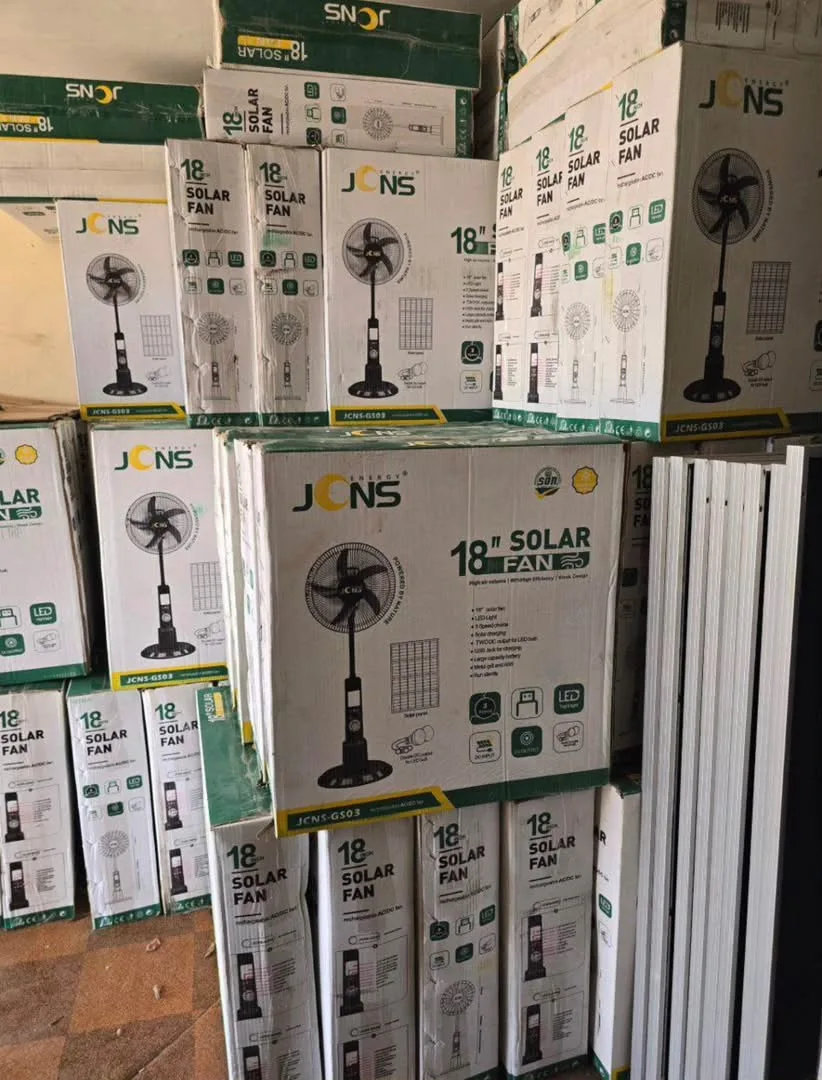
- Wholesale Pricing: Available at direct factory prices for individual buyers, office bulk buyers, and retail resellers.
- Fast Delivery Services: Enjoy same-day delivery inside Lagos State and reliable next-day delivery to all other Nigerian cities and states.
10 Frequently Asked Questions (FAQs) – Solar Fans in Nigeria
1. Does a remote-controlled solar fan consume more power than a manual fan?
No. The standby power consumed by an IR remote receiver chip is tiny (~0.05W) and has virtually zero impact on total battery runtime.
2. Can I leave the solar fan plugged into the solar panel all day?
Yes. Modern solar rechargeable fans include overcharge protection circuitry that automatically stops charging once the battery reaches 100%.
3. How long does the battery last on a single full charge?
Quality solar fans from Nature Solar Global Enterprises last very well between 8 to 24 hours depending on the chosen wind speed level.
4. What accessories are included in the solar fan box?
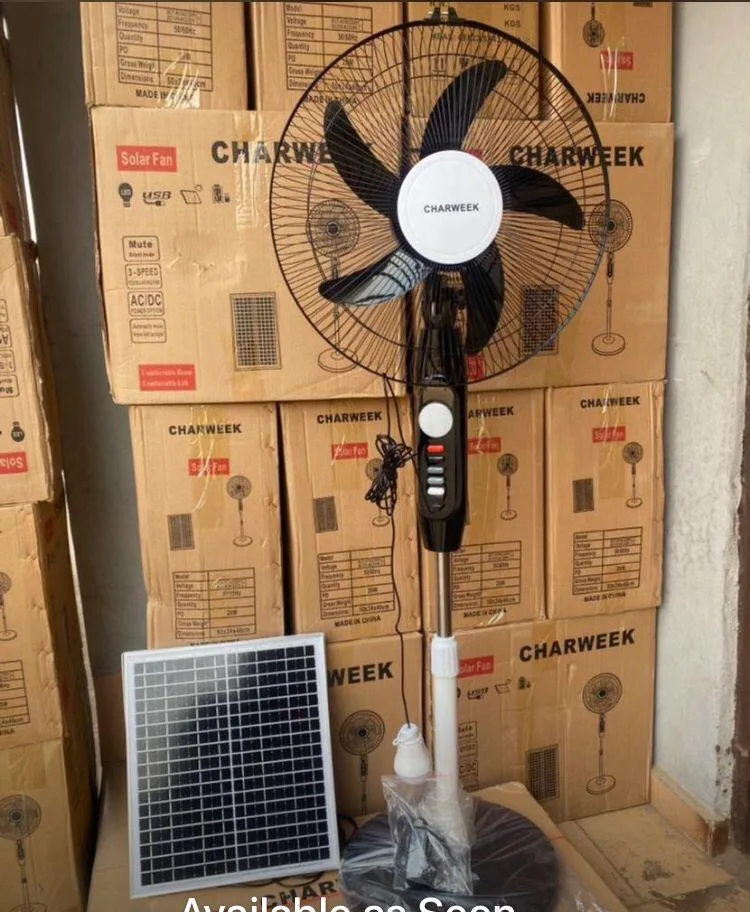
Every fan package includes the solar standing or desk fan, a matching solar panel, a wireless remote control (for remote models), and a free LED light bulb.
5. Can I turn off the fan completely using the main switch to avoid standby power loss?
Yes. If you will not be using the fan for several days, turning off the main physical power switch on the fan body breaks the circuit entirely, preventing standby drain.
6. Can I charge the solar fan using NEPA light or a generator if there is no sun?
Yes. All AC/DC solar rechargeable fans support dual charging—you can charge via the solar panel during the day or plug into a AC wall outlet when grid power is available.
7. How long does direct sunlight take to fully charge the solar fan?
Under clear Nigerian sunshine, the included solar panel fully charges the fan battery within 4 to 6 hours.
8. Does the free LED light bulb drain the fan battery quickly?
No. The bundled LED light bulb uses low-wattage lighting (~2W to 3W) and can run for hours alongside the fan without significantly shortening battery life.
9. How can I place an order for wholesale solar fans in Nigeria?
Visit the official store website at https://naturesolar.ng/product-category/solar-fan-price-in-nigeria/ or contact Nature Solar Global Enterprises via phone/WhatsApp.
10. How long does delivery take for orders outside Lagos?
Nature Solar Global Enterprises provides same-day delivery within Lagos State and next-day delivery to all other states across Nigeria.
Conclusion
Understanding whether “Does a remote-controlled solar fan consume more power?” gives you peace of mind when selecting modern cooling appliances. While remote control circuits draw a micro-amount of standby power, it is far too tiny to impact overnight battery life. The convenience of sleep timers, speed adjustments, and remote operation actually helps you manage battery usage better while sleeping.
For genuine, durable solar fans that last very well between 8 to 24 hours—complete with solar panels, free bulbs, wholesale prices, and nationwide delivery—trust Nigeria’s accredited distributor.
- Company Name: Nature Solar Global Enterprises (a subsidiary of Nature Links Nigeria Limited)
- CEO: Mr. Joseph Chikeleze
- Call Line: 07049528019
- WhatsApp Line: 09040054359
- Shop Address: F1571 Upstairs (F-Line), Alaba International Market, Lagos State, Nigeria 🇳🇬
- Official Website: https://naturesolar.ng/product-category/solar-fan-price-in-nigeria/