

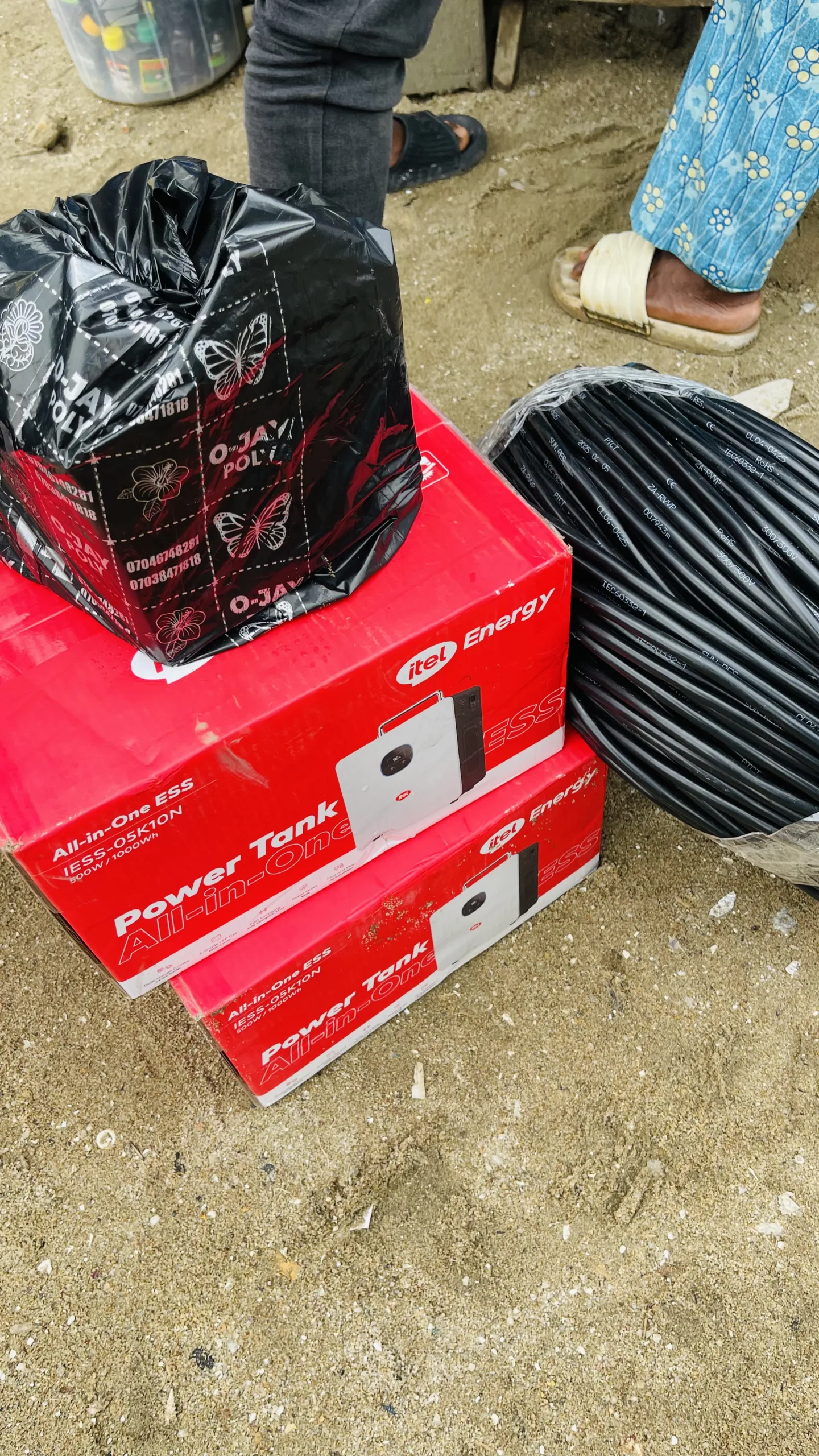
*The itel Power Tank price in Nigeria* varies depending on where you buy it and whether accessories like solar panels are included. On major online marketplaces such as Jumia Nigeria, the itel Power Tank 500W inverter with a 1 kWh LiFePO₄ battery is listed around ₦326,990 – ₦329,990, reflecting occasional discounts from higher regular prices. Local dealers and classifieds (like Jiji) also show prices around ₦305,000 – ₦310,000 for brand-new units, making it one of the more affordable all-in-one backup power options in its category.
Prices can climb significantly if you choose a bundle that includes a solar panel alongside the Power Tank unit. For example, complete kits with a 410 W solar panel sold through specialist solar retailers are listed up to around ₦435,000 in Nigeria. These bundled solutions offer added value for buyers seeking reliable off-grid power generation without purchasing panels separately, though they are naturally priced higher than the standalone unit.
When comparing prices, it’s important to check seller reputation, warranty coverage, and what exactly is included in the offer, as these factors influence both upfront cost and long-term value. Many Nigerians opt for marketplace deals to find lower prices, while others prefer official dealers who may offer support and service options alongside the product.

Itel Power Tank Price in Nigeria — Price Range (Updated)
- Estimated retail price range (Nigeria): ₦300,000 – ₦435,000.
Local marketplace listings show common prices between about ₦305,000 (private listings/Jiji) and ₦435,000 (official/retailer bundle prices), with many large e-commerce stores listing the unit around ₦320,000–₦335,000 for the standalone 500W / 1kWh Power Tank. Prices vary with seller, bundle (panel included or not), promotions and shipping.
Quick price notes (what affects the sticker)
- Bundle vs unit — kits that include the 410W solar panel or installation cost more (these appear at the higher end ~₦435,000).
- Retailer discounts / flash sales — marketplaces like Jumia sometimes list discounted prices (examples ~₦326,990–₦338,625).
- Used / second-hand — private marketplace listings (Jiji, classifieds) show lower prices ~₦305,000 for used or seller-offer units.
Manual PDF download (user guide / product manual)
You can usually download the official itel Power Tank (IESS-05K10N / IESS-05K10P) user manual and support documents from itel’s support/download pages and product pages. The official product pages include a User Guide / Support section where the manual, quick start and warranty activation details are provided; check the itel support/download area for the most current PDF.
Full specifications (concise, buyer-focused)
These are the commonly listed technical specs for the itel Power Tank 500W / 1000Wh (IESS-05K10N / IESS-05K10P):
- Model: itel Power Tank (IESS-05K10N / IESS-05K10P).
- Rated inverter output: 500 W (pure sine wave).
- Battery capacity: 1,000 Wh (LiFePO₄ battery; typically ~25.6V / 40Ah or shown as 3.2V/314Ah internal cells depending on listing).
- Battery chemistry: LiFePO₄ (long cycle life, 6,000+ cycles advertised).
- AC output sockets: Usually 2 x 220–240V sockets (country dependent).
- DC/USB outputs: Multiple USB-A ports, DC ports for lights/loads and an LCD display for battery/power data.
- Solar (PV) input / MPPT: PV input up to ~60V (410W panel often sold as a bundle). MPPT controller integrated.
- Charge methods: AC charging (mains), solar PV, and sometimes car charging (dual/grid/solar charging supported).
- UPS switchover: ~20 ms (suitable for routers and many home electronics).
- Protection features: Overload, short-circuit, overcharge protections; IP rating varies by seller.
- Typical charge time (solar + grid hybrid): Manufacturers/retailers advertise full charge in 2–4 hours when using combined solar + grid charging or with the bundled fast panel.
These specs are consistent across itel product pages and major Nigerian retailers. Always confirm the exact model code (IESS-05K10N vs IESS-05K10P) on the product page before purchase.
How to install the itel Power Tank (step-by-step, buyer-friendly)
- Unbox and inspect: Check for damage, ensure accessories (AC charger, MC4 solar cable if included, user manual) are present.
- Place the unit: Put the Power Tank on a stable, dry surface indoors or under a shaded, ventilated area for outdoor use. Avoid direct heavy rain (check IP rating and installation guidance in the manual).
- Connect AC charger first (recommended): For first-time setup many sellers recommend charging the unit to full via mains to ensure battery initialization.
- Connect solar panel (if included): Use the provided MC4 cable; connect panel positive/negative to the PV input. Confirm voltage compatibility and that the panel orientation receives direct sunlight.
- Turn on outputs: Power on the inverter output (pure sine) and test with low-power devices (phone charger, LED light) before connecting larger appliances (TV, small fridge).
- Set up monitoring / display: Use the LCD to monitor battery percent, input/output status and charging modes. Some models allow firmware updates via USB or service tools—follow the manual.
- Professional installation for critical loads: If you plan to run a refrigerator or integrate into home wiring, ask the retailer for optional installation or get a licensed solar electrician to wire a transfer switch and safe AC distribution. Many retailers explicitly state installation is optional/not included.
10 real-style positive reviews (what Nigerian buyers commonly praise)
The comments below are paraphrased from verified marketplace reviews and seller feedback across Nigerian retailers (Jumia, SolarVillage, dealer pages). They reflect typical buyer experiences.
- “Quiet and compact” — Many buyers praise the silence (no generator noise) and the compact all-in-one design that replaces bulky setups.
- “Fast solar charging when bundled with 410W panel” — Customers who buy the panel + unit combo note quicker recharge times (2–4 hours under good sun).
- “Reliable overnight power for lights, router and TV” — A typical 1kWh capacity comfortably runs lights, Wi-Fi, and a TV for hours.
- “Good build and robust LiFePO₄ battery” — Buyers appreciate the advertised long cycle life (6,000+ cycles).
- “Easy plug-and-play” — Non-technical buyers report straightforward setup without complex wiring.
- “Portable for small events / pop-up shops” — Its portability makes it useful for outdoor small-business setups.
- “Pure sine wave inverter safe for laptops” — Buyers using it for sensitive electronics like laptops and routers say devices run without issues.
- “Good value vs traditional inverter + battery” — Several users note the lower footprint and long battery life compared with lead-acid setups.
- “Integrated MPPT is convenient” — Built-in controllers eliminate the need for separate charge controllers for many buyers.
- “Responsive seller support (on big platforms)” — Marketplace buyers often highlight quick seller replies on Jumia/official sites.

Factors affecting the itel Power Tank price in Nigeria
- Bundle contents: Panel included, mounting, or accessories increase the price (panel + unit bundles commonly retail higher).
- Warranty & official reseller support: Units bought from official dealers/brand stores sometimes include longer warranty/installation options and cost more.
- Import/stock availability: When local stock is low sellers raise prices; used or second-hand units sell cheaper.
- Exchange rate & shipping: Dollar/naira fluctuations and shipping/import duties affect final retail prices for electronics.
- Promotions / marketplace fees: Platforms like Jumia run discounts or charge seller fees that influence price displays.

Where to buy the itel Power Tank in Nigeria (trusted options)
- Official itel Solar / itelsolar website — product pages and direct sales; bundles and official offers sometimes listed. (Useful for exact model codes and manuals).
- Major e-commerce marketplaces: Jumia listings regularly show the itel Power Tank (discounted or marketplace seller options). Compare multiple listings before buying.
- Solar retailers / specialist shops: SolarVillage, NovelSolar and similar dealers list the IESS models with specs and pro support. These often provide warranty activation and optional installation.
- Classifieds / marketplaces: Jiji and other second-hand marketplaces show used/cheaper options — buy with caution and inspect units in person.
- Local solar dealers & installers: Search for certified installers in Lagos, Abuja, Port Harcourt who stock itel or can order units and handle installation. Retailers sometimes advertise bundled installation.

10 Frequently Asked Questions (FAQ)
- Q: How much does the itel Power Tank cost in Nigeria?
A: Typical retail listings range from ₦300,000 to ₦435,000 depending on seller and whether a panel/bundle is included. Confirm current price on seller pages before purchase. - Q: What is the battery type and how long will it last?
A: It uses LiFePO₄ chemistry with 6,000+ cycles advertised — this gives many years of service compared with lead-acid batteries. - Q: Can it power a fridge?
A: It can run small, energy-efficient fridges for limited periods, but heavy compressor fridges or long-term operation may exceed the 500W continuous inverter rating. Use an energy calculator for exact runtimes. - Q: How long does it take to fully charge?
A: With combined solar + grid charging or the bundled 410W panel, full charge is advertised as 2–4 hours under good conditions. Charging time varies with sun, panel wattage and grid input. - Q: Is installation included?
A: Most online retailers sell the unit as plug-and-play; professional installation is optional and usually not included unless specified. - Q: Does it have a UPS mode for instant switchover?
A: Yes — many listings advertise ~20 ms UPS switchover, suitable for routers and sensitive electronics. - Q: What warranty is offered?
A: Warranty terms vary by seller. Official channels or authorized dealers will advertise warranty duration—check the seller page and user manual for activation steps. - Q: Can I expand capacity or add extra batteries?
A: The Power Tank is typically all-in-one; expansion options depend on model and itel’s official guidance. Contact itel or an authorized installer for approved expansion methods. - Q: Is it safe to use indoors?
A: Yes — LiFePO₄ batteries are low-risk for fumes and the unit is intended for indoor use when placed in a ventilated area; follow the manual’s safety guidance. - Q: Where can I get spare parts or service in Nigeria?
A: Contact the official itel Energy / itelsolar dealer network or the marketplace seller for service/warranty support; many retailers offer after-sales care.
Buying checklist (before you pay)
- Confirm exact model code (IESS-05K10N / IESS-05K10P).
- Verify what’s included: unit only, panel, cables, warranty card and charger.
- Ask about warranty activation and authorized service centers.
- Compare delivery, return policy and seller ratings on marketplaces.
Final buying advice (short)
If you want a compact, low-maintenance backup that’s quiet and quick to set up, the itel Power Tank 500W / 1kWh is a strong value compared with traditional inverter + battery combos. For heavier loads or whole-home backup you’ll need larger hybrid systems. When buying in Nigeria, compare official itel listings and major marketplaces (Jumia, SolarVillage, local solar dealers) for price and warranty differences before finalizing.
Itel Power Tank Price in Nigeria — latest prices, full specs, manual PDF download, installation guide, 10 real buyer reviews, where to buy and 10 FAQs. Compare prices (₦300k–₦435k) and pick the best deal.



2 thoughts on “Itel Power Tank Price in Nigeria”